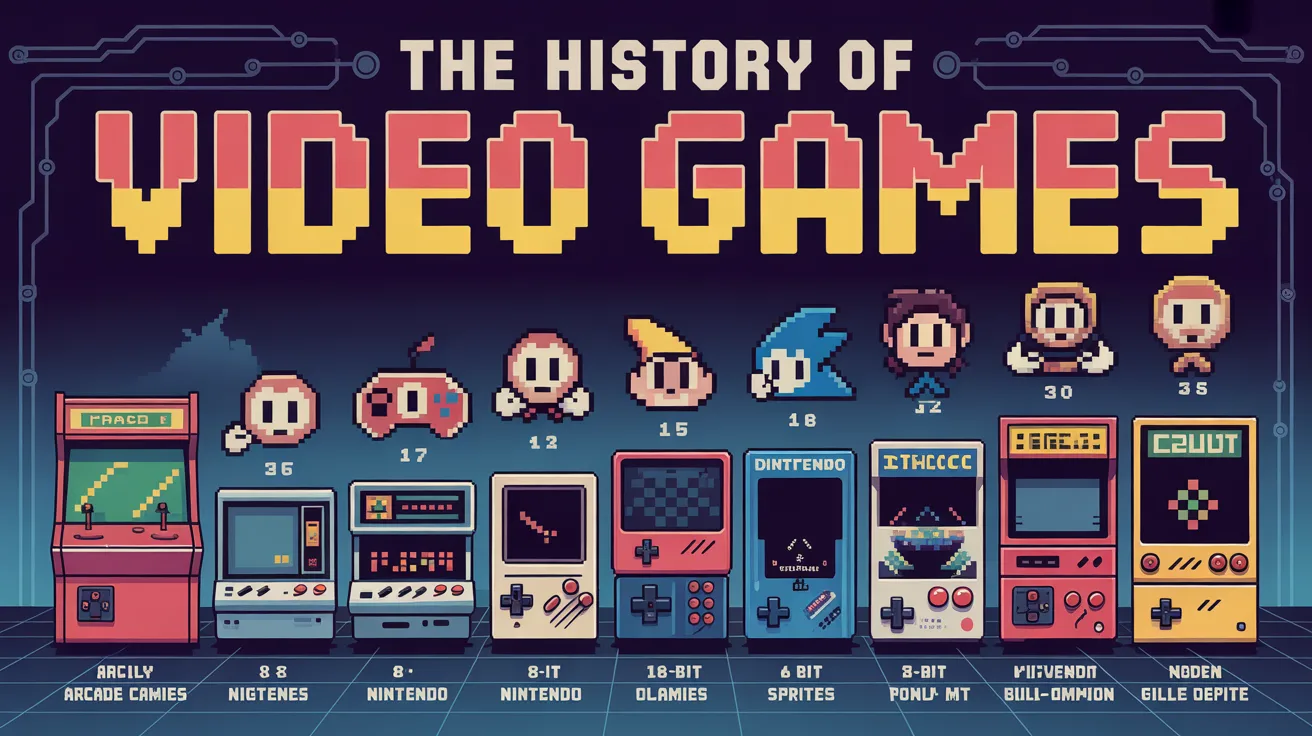
The History of Video Games – Guide
Introduction: Understanding the World of Video Games
Video games are more than just a pastime; they represent a cultural and technological evolution that has shaped entertainment, education, and social interaction. From simple pixelated graphics to immersive virtual worlds, video games have become a complex ecosystem, blending art, storytelling, and cutting-edge technology. Understanding their history provides insights into how gaming has influenced modern culture and continues to drive innovation.
Why Video Games Matter Today
Video games are now an integral part of mainstream culture, influencing movies, music, and even sports. They serve not only as entertainment but as tools for cognitive development, social connection, and professional careers in esports. Businesses leverage gamification to enhance user engagement, while educators adopt game-based learning to improve retention and critical thinking skills. Recognizing the relevance of video games helps one appreciate their impact on society and economy.
Key Benefits and Insights
Cognitive and Social Benefits
- Problem-Solving Skills: Strategy games enhance analytical thinking.
- Hand-Eye Coordination: Action and simulation games improve reflexes and coordination.
- Social Interaction: Multiplayer games foster teamwork, communication, and global connections.
Economic and Professional Opportunities
- Career Paths: Game development, design, and esports offer lucrative professions.
- Entrepreneurship: Indie game developers can build global audiences with minimal initial investment.
- Technological Innovation: Video games often drive advancements in graphics, AI, and interactive design.
The Evolution of Video Games
Early Beginnings
The roots of video games lie in simple electronic experiments that transformed interactive play. Early games were experimental and often confined to academic or hobbyist settings, using basic hardware to create simple visuals and sound. These foundational experiences laid the groundwork for more complex systems.
The Rise of Consoles and PCs
The introduction of home consoles and personal computers transformed video games into mainstream entertainment. Consoles brought gaming into living rooms, while PCs offered versatility and creativity, allowing players to modify and design game environments. Iconic titles began shaping the industry, establishing genres and storytelling methods still influential today.
Online Multiplayer and Community Building
The evolution of networking capabilities enabled real-time multiplayer experiences. Gamers could now connect globally, forming communities, competitive leagues, and collaborative projects. Online platforms also allowed for user-generated content, enriching the gaming ecosystem and fostering innovation.
Mobile Gaming Revolution
The proliferation of smartphones and tablets expanded gaming accessibility. Mobile games democratized the experience, allowing casual and hardcore gamers alike to engage anytime, anywhere. Monetization models such as in-app purchases and subscriptions created new revenue streams, influencing game design and development priorities.
Emerging Technologies and Virtual Worlds
Cutting-edge technologies like virtual reality (VR), augmented reality (AR), and cloud gaming are redefining player experiences. These innovations offer immersive storytelling, realistic simulations, and new ways to interact with digital environments. They also present opportunities for education, healthcare, and remote collaboration, demonstrating gaming’s influence beyond entertainment.
Practical Applications of Gaming Knowledge
- Game-Based Learning: Educators can integrate games to teach complex concepts.
- Professional Development: Simulations train professionals in aviation, medicine, and management.
- Marketing and Engagement: Businesses use gamified campaigns to boost brand loyalty and customer engagement.
Real-Life Use Cases and Examples
- Esports Competitions: Professional tournaments attract millions of viewers and offer substantial prize pools.
- Educational Platforms: Games like interactive coding platforms teach programming in an engaging way.
- Health and Therapy: Games help in physical rehabilitation, cognitive therapy, and stress relief.
Expert Tips and Best Practices
- Diversify Your Game Library: Exposure to different genres enhances creativity and critical thinking.
- Engage with Communities: Join forums and multiplayer games to learn strategies and build networks.
- Stay Updated with Trends: Follow industry news and emerging technologies to anticipate shifts in the gaming landscape.
Common Challenges and How to Overcome Them
- Screen Time Management: Balance gaming with physical activity and social interaction.
- Online Safety: Use privacy settings and educate young gamers about cyber risks.
- Content Quality: Seek high-quality, well-reviewed games to ensure meaningful experiences.
Comparisons and Alternatives
While video games offer unique interactive experiences, alternatives like board games, puzzles, and creative software also enhance cognitive skills. Comparing gaming with these options highlights its advantages in engagement, adaptability, and social connectivity.
Future Perspectives of Gaming
The future promises continued convergence of gaming with AI, VR, and cloud-based experiences. Cross-platform play, immersive storytelling, and AI-driven NPCs (non-player characters) will redefine engagement. Gaming will increasingly intersect with education, professional training, and virtual social spaces, creating a holistic digital ecosystem.
Actionable Insights
- Leverage Gaming for Learning: Explore educational games to enhance knowledge retention.
- Invest in Skill Development: Consider courses in game design, programming, or animation.
- Participate in Communities: Join online forums, attend conventions, and collaborate on projects.
Frequently Asked Questions
What are the different types of video games, and how do they impact players?
Video games are diverse, ranging from action, strategy, role-playing, simulation, and educational genres. Action games enhance reflexes and coordination. Strategy games cultivate analytical thinking and problem-solving skills. Role-playing games (RPGs) foster creativity, narrative understanding, and decision-making. Simulation games offer real-world scenarios, teaching practical skills like resource management and critical analysis. Educational games target knowledge retention and cognitive development. The impact of each genre varies but often overlaps; for example, a strategy RPG might improve planning while also offering narrative engagement. Research indicates that diverse gameplay improves multitasking, adaptability, and social skills, especially in multiplayer settings. Gamers also benefit from exposure to varied challenges, enhancing both cognitive flexibility and emotional resilience. Understanding genre differences allows players, educators, and developers to select games that align with specific goals, whether educational, recreational, or professional. For example, using a flight simulator can train aspiring pilots, while collaborative strategy games can develop teamwork and leadership skills. In essence, the type of game influences both skill acquisition and personal growth, offering unique advantages depending on context and usage.
How have online and multiplayer games changed the gaming landscape?
Online and multiplayer games revolutionized gaming by connecting players across the globe, creating shared experiences and virtual communities. Multiplayer platforms enable cooperative missions, competitive tournaments, and social interactions, fostering a sense of belonging and teamwork. The advent of live streaming and esports has amplified visibility, transforming casual players into professional athletes and content creators. Online functionality also allows continuous updates, downloadable content (DLC), and community-driven modifications, extending the life and relevance of games. Social connectivity through voice chat, forums, and in-game events promotes collaboration, negotiation, and problem-solving. Additionally, multiplayer dynamics introduce economic opportunities via streaming, content creation, and in-game transactions. The combination of social engagement, competitive structure, and monetization potential demonstrates the profound impact of online gaming on culture, professional careers, and technological development. Understanding these dynamics is crucial for players, educators, and businesses aiming to harness the interactive and collaborative power of modern games.
What role does technology play in the evolution of video games?
Technology is the cornerstone of video game evolution, influencing graphics, mechanics, interactivity, and accessibility. Advancements in processing power, artificial intelligence, and cloud computing have enabled complex game worlds, realistic physics, and intelligent non-player characters. Innovations in VR and AR provide immersive experiences, allowing players to interact with virtual environments in intuitive ways. Mobile technology has broadened accessibility, making games available anytime and anywhere, while cross-platform compatibility unifies communities across devices. Development tools and engines, such as Unity and Unreal Engine, democratize game creation, enabling indie developers to produce high-quality content. Beyond entertainment, technological integration extends gaming into education, healthcare, and professional training. The synergy between technology and gaming fosters creativity, problem-solving, and engagement, demonstrating that technological advancements not only enhance gameplay but also expand practical applications. For developers and educators, staying abreast of technological trends ensures the creation of impactful, future-ready games.
How can gaming skills be applied in real-life scenarios?
Gaming skills often translate into valuable real-life competencies. Strategic thinking and planning from strategy games improve decision-making in professional contexts. Hand-eye coordination and reaction time developed in action games benefit careers in surgery, sports, and emergency response. Multiplayer and collaborative gaming cultivate communication, teamwork, and leadership skills applicable in corporate and project-based environments. Problem-solving abilities honed through complex gameplay enhance analytical reasoning and adaptability. Simulation games offer direct skill transfer, such as flight simulators training pilots or city-building games teaching resource management. Additionally, gamification principles can be applied in education, workplace training, and behavioral interventions to motivate engagement and reinforce learning objectives. Understanding how gaming nurtures transferable skills allows individuals, educators, and organizations to leverage interactive experiences for personal development, professional growth, and team performance improvement.
What trends are shaping the future of gaming?
Emerging trends in gaming focus on immersive, interactive, and socially connected experiences. Virtual reality (VR) and augmented reality (AR) are creating fully immersive environments where players interact physically and emotionally with game worlds. Cloud gaming platforms remove hardware barriers, offering instant access to high-quality titles across devices. Artificial intelligence enhances game design, enabling dynamic storytelling, adaptive difficulty, and responsive non-player characters. Social and collaborative gaming continues to expand, fostering community-driven content and competitive esports ecosystems. Mobile and cross-platform play ensures accessibility, while subscription models and digital marketplaces redefine monetization. These trends indicate a shift towards integrated digital experiences, where entertainment, education, and social interaction converge. Players, developers, and businesses must adapt to these trends to remain relevant, innovative, and engaged in a rapidly evolving landscape.
Conclusion: The Lasting Legacy of Video Games
Video games have grown from simple experiments to complex ecosystems influencing culture, technology, and society. Their evolution demonstrates how interactive media can educate, entertain, and connect people worldwide. Understanding the history, benefits, and emerging trends equips enthusiasts, professionals, and educators with the insights needed to leverage gaming effectively. As technology advances and gaming continues to integrate with other sectors, its role in shaping the future of entertainment, education, and social interaction becomes increasingly significant. The journey of video games reflects a blend of creativity, innovation, and human experience that continues to captivate audiences globally.
Recent Posts

Why Your Blog Gets Traffic But No Clicks (3X Your CTR Fast)
You check Google Analytics. The numbers look solid—thousands of impressions, steady organic traffic rolling in. But then you see the ugly truth: your click-through rate is hovering at 1.2%, and your phone isn’t ringing with leads. Sound familiar? This is the silent killer of blogging success. You’re winning the visibility battle but losing the engagement...
Read More
Top AI Side Hustles That Require Zero Investment: The Complete Beginner’s Guide
The landscape of earning money online has fundamentally shifted. What once required expensive software, years of training, or significant startup capital can now be accomplished with nothing more than a laptop, an internet connection, and free artificial intelligence tools. The barrier to entry hasn’t just been lowered—it has been demolished. Whether you are a student...
Read More
Unlock the Power of AI: How Beginners Are Making $500/Month with AI Tools
Last year, I was stuck in the same cycle most people face when trying to earn extra income online. I spent hours creating content, designing graphics, or handling repetitive tasks, only to see minimal returns. Then I started experimenting with AI tools—not as a magic button, but as smart assistants that multiply effort. Over several...
Read More